NIGER DELTA SECURITY COUNCIL (NDSC)
His Excellency,
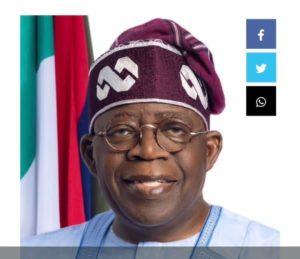
President Bola Ahmed Tinubu, GCFR
President and Commander-in-Chief of the Armed Forces
Federal Republic of Nigeria
Aso Rock Presidential Villa
Abuja, FCT
YOUR EXCELLENCY,
FORMAL LETTER OF SECURITY WARNING AND CALL FOR PRESIDENTIAL INTERVENTION FOLLOWING THE OWERRI JOINT HOUSE COMMITTEE RETREAT ON PIPELINE SURVEILLANCE
We write to Your Excellency as a matter of urgent national security.
The Niger Delta Security Council, in alignment with the Niger Delta Stakeholders Forum and Niger Delta Ethnic Nationalities whose formal communiqué was addressed to Your Excellency on May 13, 2026, has carefully reviewed the proceedings, resolutions, and public character of the three-day retreat convened by the House Committee on Petroleum Resources (Downstream), chaired by Hon. Ikenga Ugochinyere Ikeagwuonu, in Owerri, Imo State, which concluded yesterday, Tuesday, May 27, 2026.
The retreat concluded with a communiqué recommending the immediate and long-term renewal of the pipeline surveillance contract awarded to a single private security company, and further recommending that the company be designated a “Company of National Strategic Importance.” The Chairman closed proceedings with the words: “Owerri has spoken. We will follow up. We will hold accountable. We will not relent.”
Your Excellency, we write today because Owerri did not speak for the Niger Delta. It did not speak for Nigeria. And what it set in motion carries consequences for national security that cannot be left unaddressed at the highest level of the Nigerian state.
SECTION ONE: WHAT HAPPENED IN OWERRI
What the Nigerian public witnessed was not parliamentary oversight. A constitutional institution of the Federal Republic was converted, in full public view, into a validation forum for a preferred contractor. The Committee dismissed all petitions against that contractor, declared there was “no credible evidence to sustain any of the allegations,” recommended permanent national strategic status for it, and closed with a battle cry before conducting any comparative policy review.
That is not oversight. That is a contract endorsement performed at the taxpayer’s expense. This is not an unfortunate outcome. It is a constitutional failure that now requires executive attention.
The retreat proceeded as though only one surveillance company operates in the Niger Delta. That is false. Pipeline Infrastructure Nigeria Limited manages surveillance of the Eastern Corridor of the Trans Niger Pipeline and has publicly committed to aligning its operations with the government’s 2.5 million barrel per day production target. It has received commendation from traditional rulers across host communities in Rivers, Bayelsa, Imo, and Abia states. Maton Engineering Nigeria Limited and other operators function across the region under varying contractual frameworks. A national policy engagement that ignores all of them to celebrate one is not oversight. It is one company being shielded from competition by the institution that is supposed to hold it accountable.
SECTION TWO: THE SECURITY WARNING YOUR EXCELLENCY MUST HEAR
Your Excellency, this Council does not write with alarm it cannot justify. We write because the men in this region who have seen crisis before are reading the same signs they read in 2015, and those signs led to the Niger Delta Avengers, the collapse of crude oil production to 900,000 barrels per day, and a national economic emergency that every Nigerian felt.
The current trajectory carries four specific and serious security risks that demand presidential attention.
The first is the risk of concentrated non-state actor power with no constitutional accountability. The entities empowered under the dominant surveillance contract are better funded, better organised, and more technologically capable than at any point in the post-amnesty history of this region. Night vision drones capable of launching from moving vehicles were publicly displayed at the April 8, 2026 National Assembly roundtable. No independent accountability framework governs their deployment. No constitutional obligation binds their operators to the Nigerian state. If this arrangement collapses, if interests diverge, if payments are disputed, if political winds shift, the Nigerian Armed Forces will be called to contain actors that the state itself has equipped, funded, and elevated. That is not a security architecture. It is a liability.
The second is the risk of regional destabilisation through the exclusion of proven stabilisers. The leaders who physically held the Niger Delta together during the 2016 Avengers crisis are being systematically excluded from the current security architecture. Senior High Chief Bibopere Ajube sealed the waterways linking Edo, Delta, and Ondo states, making it impossible for the crisis to reach the Southwest corridor. King Michael Ateke Tom held Rivers State firm. King Dokubo Asari blocked the Kalabari axis. Chief Victor Ben Ebikabowei aligned with government containment at personal risk. Chief Michael Jonny of Gbaramatu went around television stations, including Channels Television, at the height of the emergency and publicly named the leadership behind the Avengers on national broadcast, demanding accountability when silence was the safer choice. Not one of these men features in the current surveillance architecture. When those who protected Nigeria are excluded and those who threatened it are elevated, the signal sent to the next generation of young men in the creeks is one Nigeria cannot afford to send.
The third is the risk of a return to suppressed production. Nigeria’s crude oil production stands at 1.488 million barrels per day as of April 2026, according to NUPRC. Nigeria has missed its OPEC quota of 1.5 million barrels per day for nine consecutive months. The federal government’s own 2026 budget assumed 1.84 million barrels per day. The pre-2015 decentralised model delivered 2.4 to 2.5 million barrels per day. The gap between then and now is nearly one million barrels every day. At current Brent crude prices of approximately 103 dollars per barrel, that is approximately 93 million dollars in daily revenue Nigeria is not earning every single day. Over 33 billion dollars every year. Any further deterioration in the security architecture risks driving those figures lower still, with consequences the Nigerian economy cannot absorb.
The fourth is the risk of institutional legitimacy collapse. When a parliamentary committee dismisses all petitions against a contractor without transparent review, recommends permanent national strategic status for that contractor, and closes proceedings before conducting any comparative policy assessment, public confidence in the oversight institutions of the Nigerian state is damaged. When that same committee fails to address documented allegations that actors now celebrated as security providers were linked to the era of Nigeria’s worst oil production collapse, the message to the Nigerian public and to the international community is that accountability is available only to those without political protection. That message has consequences for investment, for international perception, and for the social contract between the Nigerian state and its citizens.
SECTION THREE: THE PRODUCTION TRUTH NIGERIA IS NOT BEING TOLD
Your Excellency, the triumphalist narrative advanced at the Owerri retreat is not supported by official data. Nigeria’s crude oil production at 1.488 million barrels per day is the highest in four months but remains below the OPEC quota, below the budget benchmark, and nearly one million barrels per day below what the pre-2015 decentralised structure delivered.
Furthermore, in 2024, the Nigerian Navy arrested four persons suspected to be operatives of the dominant private surveillance contractor for attempted oil theft. Four alleged operatives of the very contractor being recommended for permanent national strategic status were caught by the Nigerian Armed Forces committing the exact crime that contractor is paid to prevent. This fact was not raised at the Owerri retreat. It must be raised at the presidential level.
The Nigerian Armed Forces, operating under constitutional mandate, have delivered verifiable, documented, published results in the fight against oil theft and pipeline vandalism. They do not stage press conferences with equipment displays. They work. Any serious assessment of pipeline security in the Niger Delta must begin with an honest accounting of what the Armed Forces have achieved and what private contractors have independently verified as their own contribution, distinct from that of the Armed Forces.
SECTION FOUR: WHAT THE NIGER DELTA SECURITY COUNCIL CALLS ON YOUR EXCELLENCY TO DO
Your Excellency, we respectfully call on you to take the following actions as a matter of urgency.
Direct an immediate executive review of the Owerri retreat communiqué and its recommendations before any implementation is commenced. The recommendation to designate a single private surveillance company as a “Company of National Strategic Importance” has profound national security implications that must be subjected to executive scrutiny before it advances further.
Direct the relevant security agencies, including the DSS and the Office of the National Security Adviser, to conduct an independent assessment of the security risks associated with the current centralised surveillance arrangement, including the concentration of military-grade equipment and operational capacity in the hands of a single non-state actor with no constitutional obligation to the Nigerian state.
Direct the Nigerian Upstream Petroleum Regulatory Commission to publish a comprehensive, independently verified production-performance report disaggregated by surveillance contractor, so that the Nigerian state and the Nigerian public can assess what each operator has independently contributed to national production outcomes.
Direct the National Assembly to reopen all decentralisation petitions and stakeholder submissions dismissed at Owerri without transparent review, and to conduct independent public hearings across multiple Niger Delta states rather than centralised engagements perceived as politically predetermined.
Direct the commissioning of a transparent, independent comparative policy review between centralised and decentralised surveillance frameworks, using verified NUPRC production data as the primary performance measure, with findings reported directly to the Presidency.
Direct the establishment of transparent participation structures guaranteeing the inclusion of host communities, indigenous operators, and proven security stakeholders, including those with documented track records of protecting national assets, who have been excluded from the current architecture.
SECTION FIVE: THE APPEAL
Your Excellency, the Niger Delta Security Council speaks today as a body aligned with men and women who chose Nigeria when choosing Nigeria was costly. They walked into EFCC offices when summoned. They stood in the creeks, on the waterways, and in front of national television cameras in 2016 to hold the line that kept this country’s oil economy from complete collapse.
They are not asking for reward. They are asking for fairness. They are asking for the accountability that a democratic state owes to those who defended it.
The Owerri retreat moved Nigeria in the wrong direction. The patterns we are observing are the same patterns that preceded the last crisis. The warning signs are visible to those who know this region and have lived through what those signs produce.
Your Excellency has the authority, the institutional tools, and the historical evidence to correct this course. We urge you to use them.
The Niger Delta has kept Nigeria’s economy alive for six decades. It deserves a security architecture built on transparency, fairness, and the kind of genuine accountability that does not require a parliamentary retreat to manufacture.
Respectfully submitted,
Signed
Ebi Smart
Secretary General, Niger Delta Security Council (NDSC)
In alignment with the Niger Delta Stakeholders Forum and Niger Delta Ethnic Nationalities
Port Harcourt, Wednesday, May 28, 2026
REF: NDSC/PH/001/2026
CC:
His Excellency, Senator Godswill Akpabio, GCON
President of the Senate
National Assembly Complex, Abuja
Rt. Hon. Tajudeen Abbas
Speaker, House of Representatives
National Assembly Complex, Abuja
The Director General
Department of State Services (DSS)
Aso Drive, Abuja
The Chief of Defence Staff
Defence Headquarters, Abuja
The Inspector General of Police
Force Headquarters, Louis Edet House, Abuja
The Group Chief Executive Officer
Nigerian National Petroleum Company Limited (NNPCL)
NNPC Towers, Herbert Macaulay Way, Abuja
The Executive Chairman
Economic and Financial Crimes Commission (EFCC)
, Abuja
The Commission Chairman
Nigerian Upstream Petroleum Regulatory Commission (NUPRC)
Abuja