
CAN ONDO DECLARES: NO EXCUSE, NO SILENCE — CHURCH MUST RISE AGAINST GBV
The Christian Association of Nigeria (CAN), Ondo State Chapter, has renewed its commitment to ending gender-based violence (GBV) and violence against girls (VAG), declaring that the Church must no longer remain silent in the face of abuse, exploitation and injustice against women and children.
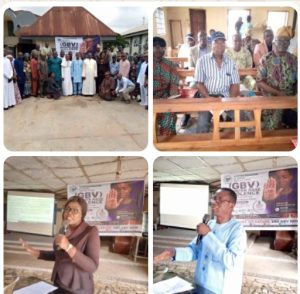
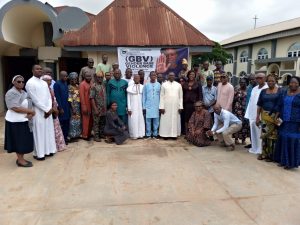
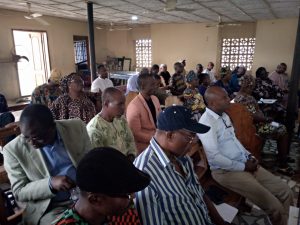
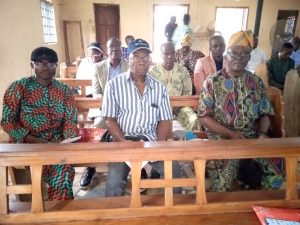
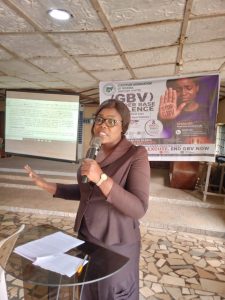
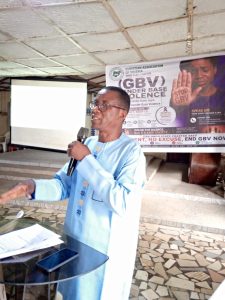
The declaration was made on Wednesday, August 19, 2026, during a One-Day Step-Down Training on the Prevention of Gender-Based Violence and Violence Against Girls, organised for representatives across the five blocs of CAN in Ondo State. The programme was held at Mary Queen of Nigeria Catholic Church, Danjuma, Ondo State.
In his welcome address, the Chairman of CAN, Ondo State Chapter, Rev. Fr. Anselm Olorunfemi Ologunwa, described the training as more than an ordinary gathering, stressing that it represented a divine assignment for the Church to respond decisively to the painful reality of violence against women and girls.
He emphasised that every human being is created in the image of God, citing Genesis 1:27, and noted that any action that dehumanises, abuses, violates or demeans another person constitutes an assault on the dignity with which God has endowed humanity.
According to him, the Church has a critical responsibility to protect the vulnerable, adding that the training was designed to equip CAN bloc leaders and other influencers with the knowledge and tools required to return to their churches, local CAN chapters and communities as advocates for prevention, protection, healing and restoration.
Rev. Fr. Ologunwa identified silence, shame, stigma and fear of public opinion as factors that have allowed violence to remain hidden in many homes and communities. He observed that women and girls continue to suffer various forms of abuse in marriages, schools, workplaces and even places of worship, stressing that the time had come for the Church to break the silence.
He therefore charged religious leaders and participants to “speak out on all forms of GBV,” including physical, sexual, emotional, psychological and economic violence, as well as harmful traditional practices, child marriage, trafficking and other forms of violence against girls.
The CAN chairman further declared the position of the association in unequivocal terms: “No excuse, no silence, and there should be an end to GBV.” He stressed that neither culture, tradition, provocation nor a distorted interpretation of Scripture could justify beating, rape, humiliation or any other form of violence against women and girls.
He urged churches to become safe havens for survivors of abuse rather than places where victims are judged, blamed or silenced, adding that church pulpits should be used not only for preaching but also for promoting dignity, justice, protection and responsible relationships.
The chairman also expressed appreciation to the organisers and partners behind the initiative, particularly the national body of CAN and the Widows and Orphans Empowerment Organisation (WEWE), with support from the Ford Foundation, for their efforts in strengthening faith-based responses to GBV.
The training featured detailed presentations on the meaning, forms, causes and consequences of gender-based violence. One of the major training papers, “Understanding Gender-Based Violence (GBV),” was presented by Rev. Joshua Rotimi Orikogbe, MELI, JP, with credit to BIGIF.
The presentation explained that sexual and gender-based violence is often rooted in gender norms, unequal power relationships, coercion and the abuse of authority. Participants were encouraged to examine real-life situations and understand how violence can manifest beyond physical assault.
The training identified various forms of GBV, including physical, emotional, sexual and socio-economic violence, as well as harmful traditional practices, trafficking, slavery and intimate partner violence. Sexual violence discussed included rape, marital rape, child sexual abuse, defilement, incest, sexual exploitation and sexual harassment.
Participants were also sensitised to less visible forms of abuse, including emotional humiliation, psychological manipulation, confinement, economic control, denial of opportunities and services, and other practices that deprive individuals of dignity, freedom and wellbeing.
Another major presentation, titled “Strategies for Combating Gender-Based Violence: The Role of the Community,” was delivered by Dr. Adeyemi Aderosoye Anne, FICMC, Ph.D., M.Phil., LL.M., BL, LL.B. The presentation described GBV as a global problem with serious social, psychological, physical and economic consequences, particularly for women and girls.
Dr. Aderosoye highlighted the importance of the legal framework in combating GBV in Nigeria, noting that the Violence Against Persons (Prohibition) Act, 2015, and its domestication as the VAPP Law of Ondo State, 2021, provide important legal mechanisms for addressing various forms of violence.
The training further examined the root causes and drivers of GBV, including patriarchal norms, gender inequality, harmful cultural practices, economic dependency, weak enforcement mechanisms, cultural silence and stigma, low levels of education, substance abuse and harmful religious interpretations.
Religious teachings also formed a significant part of the programme, with participants examining Biblical and Qur’anic teachings that emphasise dignity, compassion, justice, love and respect. Biblical passages including Ephesians 5:25, Colossians 3:19 and 1 Peter 3:7 were highlighted as principles that call for love, consideration and respect within marriage.
The facilitators equally challenged the misuse or misinterpretation of religious texts to justify violence, stressing the importance of understanding Scripture and religious teachings within their proper contexts rather than using them as instruments of oppression.
The programme also explored the role of culture in addressing GBV. Participants were encouraged to use community gatherings, traditional institutions, art, music, storytelling and education as instruments for challenging harmful gender stereotypes and promoting peaceful, respectful and equitable relationships.
A major emphasis was placed on the responsibility of religious leaders. They were encouraged to become advocates for survivors, provide faith-based support networks, facilitate crisis intervention, promote gender-sensitive religious teachings, organise empowerment programmes and ensure that counselling does not encourage victims to endure abuse in silence.
The organisers stressed that religious leaders occupy influential positions within their communities and can therefore play a decisive role in changing attitudes, preventing violence, supporting survivors and holding perpetrators accountable through appropriate legal and community mechanisms.
Daisi Ajayi, the Monitoring and Evaluation Officer for Gender-Based Violence (GBV) in the Christian Association of Nigeria (CAN), Ondo State, has called for stronger protection, justice and support for victims and survivors of gender-based violence, particularly women and girls. Speaking at the Step-Down Training on the Prevention of GBV/VAG across the five blocs of CAN in Ondo State, Ajayi described GBV as a critical crisis affecting women and girls in Nigeria, noting that it manifests in various forms, including abduction, forced conversion, forced marriage, sexual violence, exploitation in displacement camps, as well as economic, cultural and spiritual violence arising from unequal power relations, harmful social norms and discriminatory practices. He stressed that, as Christians, every individual is created in the image of God and therefore deserves dignity, respect and protection.
Ajayi further urged Christian leaders across the various blocs, denominations and churches to use their positions responsibly in combating GBV rather than interpreting or manipulating the Word of God to the disadvantage of women and girls. According to him, churches have a significant responsibility to restore victims with love, acceptance and support, while ensuring that survivors are not left without protection, justice and appropriate redress. She noted that the frequent reports of GBV across radio, television and social media platforms should compel stakeholders to seek practical solutions to the growing menace. Welcoming participants to the training, he expressed hope that the programme would provide an opportunity for Christian leaders to share ideas, identify areas of intervention and strengthen collective efforts towards preventing GBV and protecting vulnerable persons in society.
The training concluded with a strong call for participants to take the message beyond the venue and into their respective blocs, churches, communities and families. The ultimate objective is to build a society where women and girls can live with dignity, safety and freedom from violence.
Declaring the training open, Rev. Fr. Ologunwa prayed that God would empower the participants to “bind up the brokenhearted and set the captives free,” in line with Isaiah 61:1.
With the collective resolve of CAN Ondo State and its five blocs, the message from the training was unmistakable: GBV must no longer be hidden behind culture, silence, shame or religious misconceptions. The Church must rise, speak, protect and act.