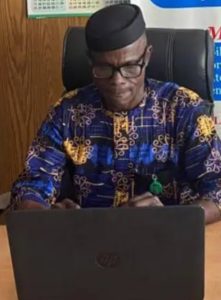
BRIDGING THE DIVIDE: FOSTERING NATIONAL UNITY IN A DIVERSE NIGERIA, PST. JAMES ADEKUNLE DELIVERS DEMOCRAT NEWS MAGAZINE’S ANNUAL PUBLIC LECTURE
A Lecture Delivered by Mr. James Adekunle at the 7th Public Lecture of The Democrat News Magazine on 7th September, 2025
Protocol`
One cannot deny the fact that the world is full of people created by God and endowed with diverse belief systems, customs, religions, languages, races, traditions, and ways of life. In a nation as vast and vibrant as Nigeria, the pursuit of unity is not a choice but a necessity. With over 250 ethnic groups, dozens of languages, and multiple religions, Nigeria stands as one of the most diverse countries on earth. Each group in the diversity tells a unique story, adding richness to the national identity.
Every tiny detail, from our mode of dressing to our values, food, skills, and range of knowledge add generously to our beauty as a people. Diversity itself is like budding flowers with many beautiful petals that complement each other in adding beauty to the environment; hence it is therefore an asset to any nation. Unfortunately, this same diversity has often fueled deep divisions in our dear country.
Nigeria today is at cross roads with many destabilizing fault-lines jeopardizing the unity and peace within. The issues that create misunderstandings, regional disparities and political mistrust, as well as low acceptance of our heterogeneity are still visible with the fractures created running deeper and wider.
A line in our National Anthem reads: “Though tribes and tongues may differ, in brotherhood we stand”.
It is however disheartening that more than a century after Nigeria’s amalgamation and over six decades since independence, the country still grapples with one critical question: How can we forge true unity in the midst of our differences?
The answer to this question does not lie in erasing the differences, but in collectively embracing them as strength and not threats. Unity, in this context, means building bridges of mutual understanding, fairness, and harmonious pursuance of shared purpose.
A History of Division
Nigeria’s divisions did not begin today. Colonial rule laid the foundation by governing regions separately thereby accentuating differences. After independence, the struggle for political dominance among the three major ethnic blocs—the Hausa-Fulani in the north, Yoruba in the west, and Igbo in the east—deepened suspicion and resentment. The civil war that followed, military coups, and cycles of ethno-religious violence only widened the fault lines.
Added to this is the visible imbalance in resource distribution, infrastructure, and opportunities between regions. This has always fueled bickering among the constituent units. This is the more reason why many Nigerians often feel a stronger allegiance to their ethnic or religious group than to the nation itself.
Need for Unity (as a Survival Strategy)
National unity is the bedrock of peace, development, and national strength. A divided nation will remain vulnerable to internal conflicts, weakened institutions, and limited or no progress. In a diverse society as ours, unity is nothing but a survival strategy. Without unity, trust in government is eroded, civic engagement fades, and national potentials squandered.
National unity serves as the backbone of any thriving nation. It promotes social cohesion, encourages collaboration, and enables people in the diversity to work together collaboratively towards common goals. Achieving this requires that people understand the beliefs and ways of life of others. This understanding will help dispel negative preconceptions and personal biases against ethnic, cultural and religious groups different from ours.
To acknowledge and accept other people’s norms that are not necessarily in line with ours, allows us to establish and maintain bridges of trust, respect, and understanding across cultures as we build relationships with others.
The time has therefore come for us to begin to recognize that our differences are not there to separate us; rather, they provide an opportunity for growth, understanding, and collective progress.
Voices of Wisdom from the Past and Present
The search for unity has been with us since the days of our founding fathers.
Nigeria’s founding fathers understood the diversity challenges clearly well; hence their timeless words continue to reverberate:
Late Dr. Nnamdi Azikiwe said: “Let us forget our differences… and forge ahead in unity. A tribe has never made a nation. A tribe is an anti-national force.”
Late Chief Obafemi Awolowo said: “The strength of a nation lies in the unity of its people, not in the uniformity of their tongues or tribes.”
The Late Sadauna, Sir Ahmadu Bello said: “Let us understand our differences… it is not a mistake by God that we have different tribes and religions. Let us live together as brothers. Each of our tribes has its own customs, beliefs, and traditions, but we have come together to make Nigeria.”
Former President Olusegun Obasanjo said: “I am a strong believer in one Nigeria. One Nigeria where every Nigerian can feel proud that he or she has a stake in this country.” “Unity with progress is worth any sacrifice.”
More recently, President Bola Tinubu during the Democracy Day 2024, said: “Nigeria is greater than any one of us… the unity of this country cannot be traded.”
These statements clearly tell us that unity is a national imperative that must be collectively worked upon and achieved.
Steps Toward Bridging the Divide
Imperatively, we will always be in coexistence with people from other divides and backgrounds. Therefore, the best we can do to develop our dear fatherland is to:
Understand, appreciate and accept other people’s differences, no matter how unaligned they are with ours.
Avoid forcing our belief systems or values on other people.
Practical steps that can help foster unity in Nigeria will include:
1. Promoting positive shared values
In a diverse nation like Nigeria, the value system plays a crucial role in fostering national unity.
When a nation promotes shared values like patriotism, honesty, respect for the rule of law, tolerance, justice, respect for diversity, fairness, transparency, accountability, hard work, integrity, duty of care, love, and sacrifice, such values give the citizens a sense of belonging and unity in addition to:
promoting peace among ethnic and religious groups,
enhancing trust in leadership and public institutions,
encouraging collaboration for development and community building, and
promoting willingness to protect the unity and sovereignty of the nation (patriotism).
This is what the National Orientation Agency is currently striving to achieve with the National Value Charter waiting to be unveiled soon by the President.
2. Promoting Cross-Cultural Interactions
Interaction and collaboration between different ethnic groups can break down stereotypes, misconceptions and prejudices, leading to increased tolerance and social harmony. This will help create a more inclusive and stable society, which is crucial for long-term development. Cross cultural marriages, the NYSC scheme, and others are in alignment with this. Therefore, more platforms that promotes cross cultural interactions need to be encouraged.
3. Inclusive Education:
Education is a powerful tool for fostering unity. Our educational curriculum should be made to reflect the diverse cultures, histories, and contributions of all ethnic groups. By teaching the value of diversity and the importance of inclusivity in our educational institutions from an early age, we will be instilling respect and understanding of other cultures in our young ones.
4. Addressing Regional Disparities and Inequality
By implementing targeted investments and inclusive policies that promote equitable resource distribution, the feelings of marginalization would be reduced. This will involve promoting equitable development across the land especially in the areas of access to infrastructure, healthcare, education, and economic opportunities.
Also, ensuring fair political representation and opportunities for all regions and ethnic groups is very key to achieving national unity.
5. Emphasizing Common Goals
By collectively focusing on our common progress and prosperity as well as dealing with our shared challenges like poverty, corruption, and insecurity, and working together to address them, citizens can develop a stronger sense of national unity.
6. Promoting Dialogue and Conflict Resolution
Grievances are a common part of our social interactions. But by promoting free and fair dialogue among groups, we can break down stereotypes and fosters mutual understanding.
Creating platforms for open and honest dialogue between different ethnic, religious, and regional groups is crucial in addressing grievances. It allows for the sharing of perspectives, building of empathy, and identification of common grounds to further cement our unity.
7. Responsible Use of the Media
Media plays a crucial role in shaping public perception. It is essential that both traditional and social media promote narratives that emphasize unity and respect for diversity. The media should amplify our collective achievements such as: cooperation, tolerance, and shared success above our shortcomings. Media campaigns should celebrate national heroes from different ethnic backgrounds and highlight successful collaborations across cultures.
Conclusion:
Unity does not mean uniformity. It means accepting our differences and still choosing to stand together as one people.
Diversity is not in any way a weakness but a strength. When managed with fairness and inclusion, it can fuel economic growth, strengthen democracy, enrich culture, and build social cohesion. By leveraging diversity, nations can achieve inclusive, sustainable, and far-reaching development.
It should be noted that bridging the divide in our diverse nation is not an overnight endeavor; it is a continuous process that requires dedication, patience, and collective actions.
Let us commit today, as one people with one destiny to foster national unity. Together, we can turn our differences into strengths and create an environment where every Nigerian can thrive.
A united Nigeria can truly harness the power of its diversity to build
a resilient and prosperous future.
One Nation, One Destiny
THANK YOU